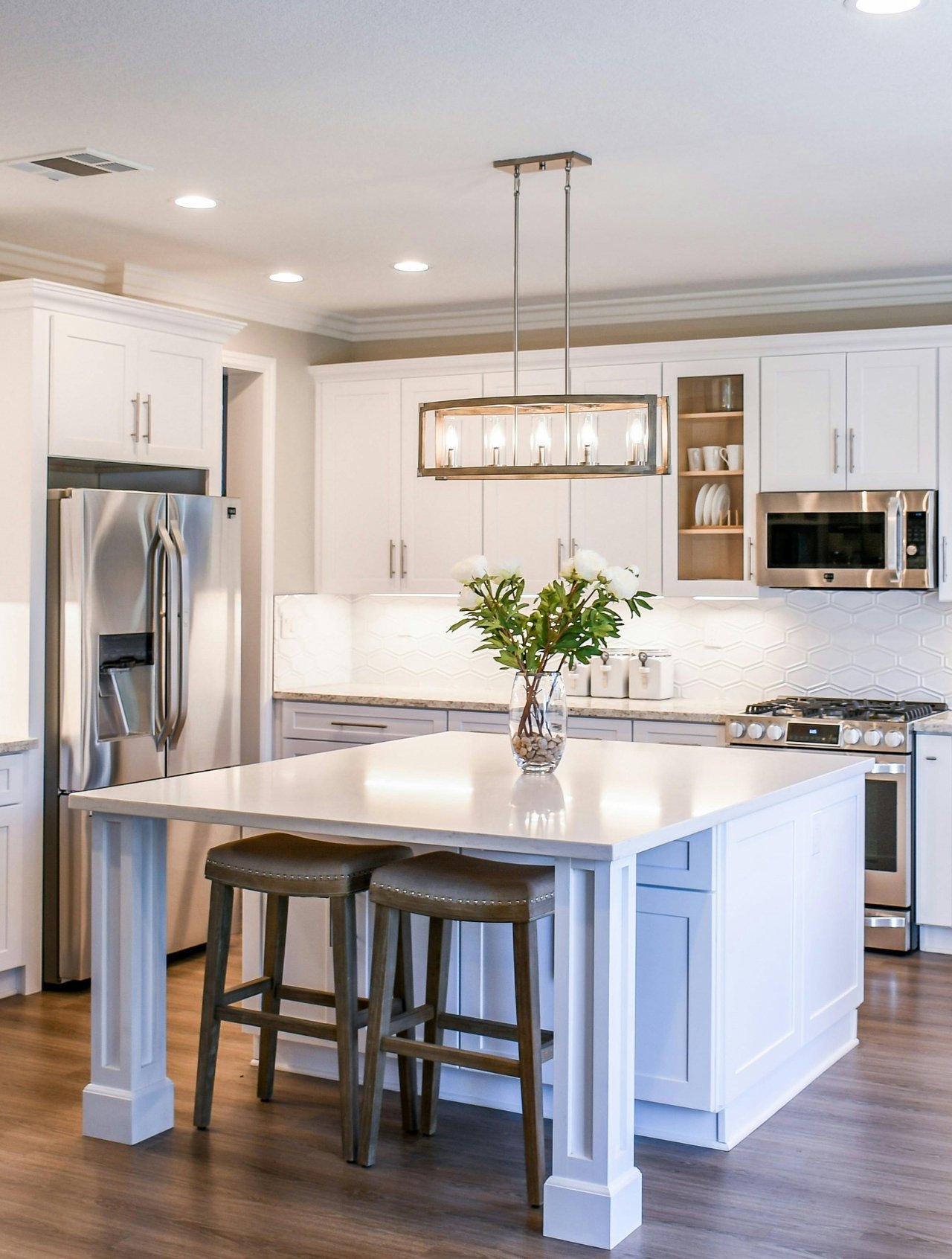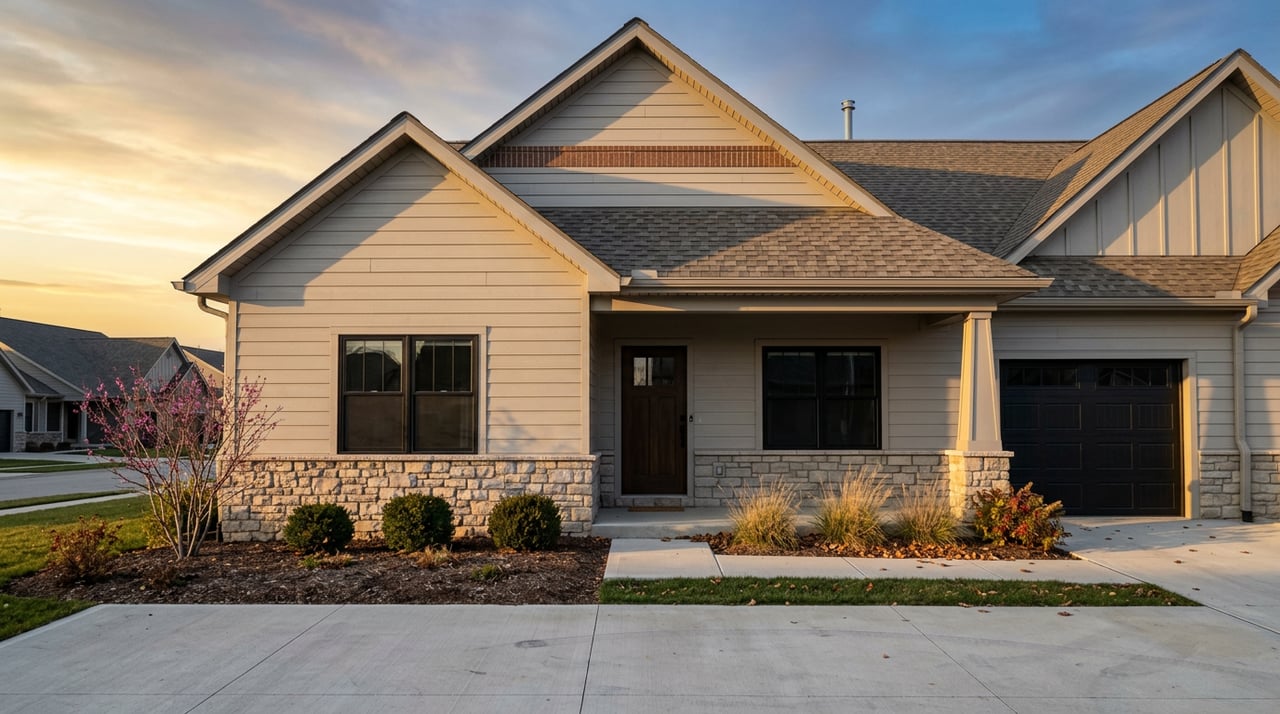
Drive Cape Horn Road out of Red Lion on any weekday morning right now and you will pass more framed trusses than finished roofs. Chapel Church Road looks the same. So does Yoe Drive. A township that most York County buyers still picture as farmland dotted with ranch homes is, at this moment, absorbing one of the largest concentrated waves of new residential construction anywhere in the county, and almost all of it is coming from a single builder.
That matters more than it sounds like it should, because it changes the answer to a question every buyer eventually asks: what does a home in this school district actually cost right now?
A County Median That Was Never Built to Answer That Question
The Realtors Association of York and Adams Counties reported a county-wide median sale price of $304,900 for 2025, a 7% increase over 2024 and part of a run that pushed the median up 49% over five years. York County Realtors closed 5,548 homes that year for a combined $1.79 billion, and the median listing sat on the market just 9 days, the third-fastest pace in the county's recorded history. RAYAC's most recent monthly snapshot, covering March 2026, shows that pace holding: a $300,000 median, an 8% year-over-year increase, and days on market ticking up only slightly, from 9 to 11.
Those are real numbers. They are also close to useless if you are trying to price a specific home in a specific township, because the same 2025 RAYAC report that produced the $304,900 county median also showed school-district medians ranging from $160,000 in York City to roughly $400,000 in the Northern school district. That is not a rounding difference. That is two and a half times, inside one county, in one calendar year.
Red Lion and Dallastown sit in the middle of that spread on paper. What is happening on the ground right now suggests the middle is not where the corridor is headed.
What's Actually Getting Built There
York Township's own list of active and pending residential developments, posted by the township in January 2026, reads like a small city being assembled in phases. The largest single items:
- Hudson Ridge, off Chapel Church Road and Yoe Drive: 456 townhomes
- Hudson South, on Yoe Drive: 162 townhomes
- Holly Meadows, on the former Myers Tree Farm site on Leader Heights Road: 91 townhomes
- Bridgewater, in three phases on Chestnut Hill Road: 156 single-family homes
- Heather Glen Phase 2: 56 duplex-style villa units
- Gotham Place: 54 townhomes
- Blue Springs, off Green Valley Road: 40 single-family duplexes
Add the smaller parcels on the same list, including a 44-unit duplex project on the former Yost farm and a handful of single-family infill lots, and the township's own January 2026 tally tops 1,000 residential units either under construction or moving through final approval.
Nearly every one of those names traces back to the same builder. Burkentine Builders, founded in 1989 by Paul and Rajean Burkentine, has grown into a vertically integrated operation that builds, manages, and sells its own communities under the Burkentine Real Estate Group and Burkentine Property Management banners. Hudson Ridge is a Burkentine community. So is Heather Glen, which held its model home grand opening on May 13, 2026, according to the Hanover Area Chamber of Commerce. First-floor villas there, three bedrooms and three full baths with a one-car garage and a full basement, start in the upper $300,000s.
Why a Single Builder's Price List Isn't the Same as a Market
When one company controls the majority of new supply in a corridor, pricing does not move the way it does in a fragmented resale market. A resale seller in York City sets a list price and waits to see what the market will bear. A builder releasing Phase 4 of a 456-unit community sets a price for that phase, holds it, and manages demand with incentives instead: a rate buydown, a closing cost credit, a free structural upgrade. The list price barely moves even when the underlying deal does.
That has a direct effect on anyone trying to use nearby new construction as a comp for an older resale home, or trying to use an older resale home as a comp for a new build. The two are priced by different logic. One responds to what a single seller thinks the market will pay today. The other responds to what a builder decided a phase should cost when the project was underwritten, adjusted only through incentives that don't always show up cleanly on a settlement sheet.
There is a financing wrinkle worth knowing too. Recent Hudson Ridge listings note the community is USDA-eligible, which opens the door to zero-down financing for qualifying buyers, something that is simply not on the table for most resale homes inside the borough itself. That is not a small detail if you are comparing a $350,000 new townhome against a $300,000 older colonial two miles away. The real cost of entry can flip depending on financing eligibility, not just sticker price.
The Affordability Assumption This Corridor Is Quietly Breaking
Buyers who haven't looked closely still tend to think of Red Lion and Dallastown as the more affordable rung of southern York County, a step down from Shrewsbury's Maryland-commuter premium and a step up from York City's rowhomes. That assumption made sense when the housing stock was mostly older single-family homes on modest lots.
It is harder to defend now that the newest, most visible supply hitting that same school district is opening in the upper $300,000s for an attached villa, not a detached home with a yard. Add builder incentives that soften the sticker price without changing it on paper, and you get a corridor where the entry point is rising even as the neighborhood's reputation for affordability stays fixed in people's heads. That gap between reputation and reality is exactly the kind of thing a county median will never show you.
None of this means the corridor is overpriced or a bad place to buy. It means the number a buyer needs isn't the county median, and it isn't even a school-district median from a year-end report. It's the price of the specific phase, the specific product type, and the specific financing path that applies to the exact home under discussion.
Questions Worth Asking Before You Write an Offer Here
Is this phase 1 or phase 4? In a 456-unit community, early-phase resales and current builder pricing can diverge quickly. Ask what phase the home you're touring belongs to and what the builder is currently charging for a comparable unit in the active phase.
What incentive is baked into the price you're seeing? A builder's advertised price and a builder's net price after a rate buydown or credit can be two different numbers. Ask directly, because that gap affects how a resale unit in the same community should be priced against it.
Does the financing program still apply? USDA eligibility and similar programs can be tied to specific loan limits or community status that shifts as a development builds out. Confirm current eligibility rather than assuming it carries over from an earlier phase.
Is construction still active nearby? With this many units still building, noise, road changes, and phased amenity completion are realistic near-term conditions, not hypotheticals.
The Bottom Line
A county median tells you where the market has been. A school-district median tells you a little more, but still flattens a corridor that is changing month to month. What actually explains pricing in Red Lion and Dallastown right now is a single builder's phased release schedule for more than a thousand units, landing in a school district that most buyers still assume is the affordable option.
If you're weighing a new-construction townhome against an older resale a few streets over, or trying to figure out what a fair offer looks like in a community that's still half framed, that's a conversation worth having with someone who tracks this corridor closely, not just the county-wide numbers.
If you want a read on a specific street, phase, or listing in York County, reach out to Jared Gettel. Let's Connect and figure out what the numbers actually mean for the home you're looking at.