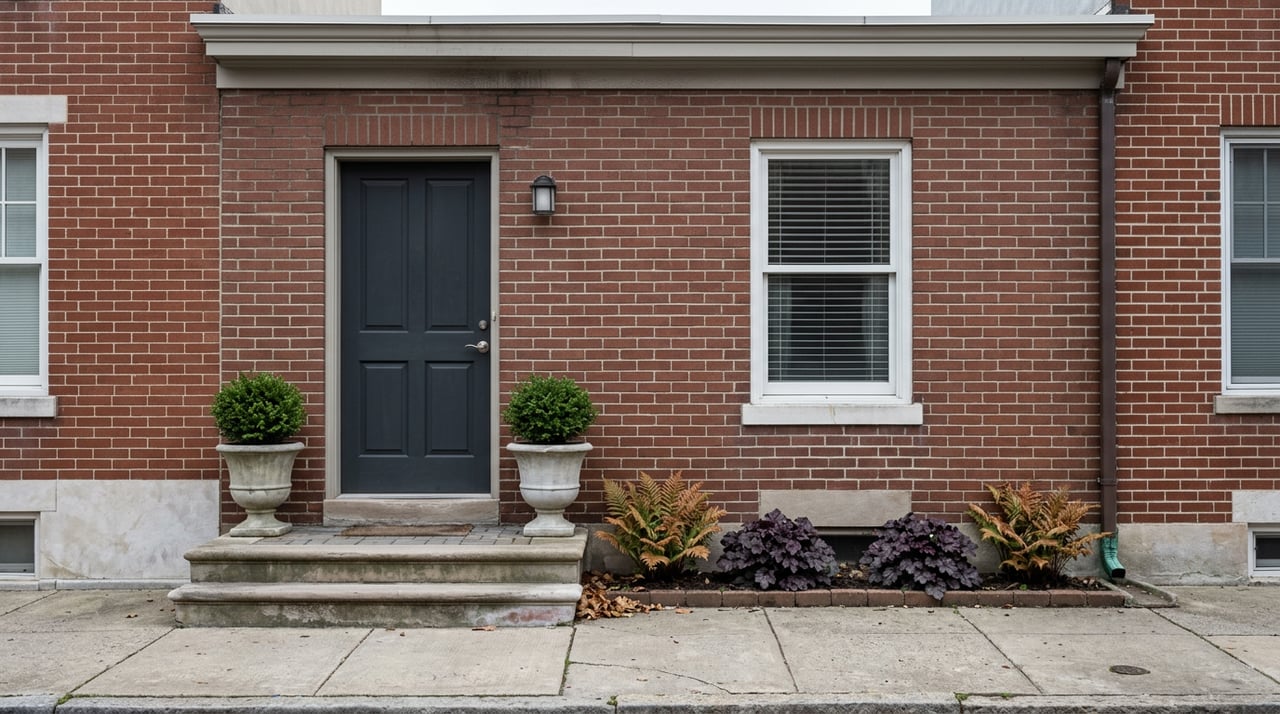
An investor gets a signed offer on a long-vacant rowhome in Allison Hill, ready to move to agreement of sale. Then the buyer's attorney asks a question nobody on the seller's side expected: has this property ever been condemned by the city? A quick call to the Bureau of Codes turns up an old order from a prior code case, still on file. Under Harrisburg's own ordinance, that changes everything about the next step. The agreement of sale cannot even be signed yet.
Most sellers assume Pennsylvania's standard disclosure paperwork and whatever city inspection applies are the whole picture. In Harrisburg, that assumption holds right up until a property meets the city's specific definition of "condemned." Once it does, a separate city rule kicks in, one that most statewide guides never mention because it does not exist outside Harrisburg, and it applies earlier in the transaction than most people expect.
A rule that only wakes up when a property is condemned
Pennsylvania's Municipal Code and Ordinance Compliance Act sets the ground rules for any municipality that chooses to run a point-of-sale inspection, commonly called a Use and Occupancy certificate. The Pennsylvania Association of Realtors explains that municipalities are not required by the act to inspect homes at resale at all. Whether a township runs that kind of inspection is a local choice.
Harrisburg's Chapter 8-509, the Buyer Notification Program, is a different animal entirely. It does not apply to every home sale in the city. It applies specifically to what the ordinance defines as condemned property: a parcel with a current condemnation order on file, meaning the Codes Administrator has already found the structure unsafe, unfit for human occupancy, or unlawful. If your property has never carried that kind of order, this chapter has nothing to say about your closing. If it has, or ever did and the order was never rescinded, the ordinance takes over before you get anywhere near a settlement table.
What the ordinance actually requires, and when
The language is specific: no agent, or owner if there is no agent, may sell a condemned property, or any interest in it, without first delivering a zoning certification to the purchaser prior to the execution of any agreement of sale. Not prior to closing. Prior to signing. That timing catches sellers and their agents off guard, because the instinct in most transactions is to sort out city paperwork during the due diligence period after an agreement is already in place.
To get that certification, the owner applies to the Bureau of Codes and pays a fee before any review happens. For a property with one to three dwelling units, the fee is $125. For anything larger, it is $125 plus $25 for each unit past three. The Codes Administrator then reviews the city's own records and, if the owner requests it or the administrator decides one is warranted, inspects the property. What comes back documents the zoning classification and the condemnation history tied to the address. The purchaser has to sign a receipt acknowledging delivery of the report, and that receipt goes back to the Codes Administrator as the city's proof that the seller complied.
There is one notable carve-out. The requirement does not apply to condemned property sold at a foreclosure sale or through the judicial tax sale process. Distressed properties moving through those channels skip this particular step.
Here is how the two systems actually differ:
| Statewide U&O (MCOCA) | Harrisburg Buyer Notification Program | |
|---|---|---|
| Authority | Pennsylvania Municipal Code and Ordinance Compliance Act | Harrisburg Codified Ordinances, Chapter 8-509 |
| Applies to | Any resale, if the municipality opts in | Only properties meeting the definition of condemned property |
| When it happens | Typically during the closing process | Before an agreement of sale can be executed |
| Fee | Varies by municipality | $125 for 1-3 units, plus $25 per additional unit |
| Exemptions | None specified in state law | Foreclosure sales and judicial tax sales |
Why this lands harder in Harrisburg's older rowhome stock
According to the city's own 2023-2027 Consolidated Plan filed with HUD, roughly 47 percent of Harrisburg's housing stock is one-unit attached, meaning rowhomes and townhouses, compared to about 12 percent one-unit detached. Neighborhoods like Midtown, Allison Hill, Old Uptown, and Shipoke carry a large share of that attached housing, much of it built well before modern code standards existed.
Age alone does not trigger a condemnation order. Years of vacancy, unresolved property maintenance violations, or a structure the city has already flagged as unsafe do. That combination shows up more often in older, long-held, or long-vacant rowhomes than in a newer suburban home in a Dauphin County township, which is exactly the kind of property an investor is more likely to be buying or selling inside the city.
The penalty structure that keeps sellers off guard
Failing to deliver the zoning certification on time is treated as a breach of the owner's or agent's duty of disclosure to the buyer, and a violation of the chapter. Anyone who violates it is subject to the general code penalty. At the same time, the ordinance says a sale is not invalidated solely because this requirement was not met, unless the failure would independently be grounds for rescinding the sale anyway.
That combination creates the same gap that shows up elsewhere in Pennsylvania's local code enforcement. The city is not going to unwind a closing over a missing certification by itself. But a title company or a buyer's attorney who spots a condemnation history on file is not going to treat that as optional either. They want the signed receipt in the file before they let the deal move forward, regardless of what the city itself would or would not do about a missing one.
Historic districts complicate the fix
If the condemned property sits inside one of Harrisburg's designated historic districts, resolving the violations behind the condemnation order takes longer than it would elsewhere. The Old Uptown Historic District, stretching from Reily Street to Maclay Street between Second and Third Street, was listed on the National Register of Historic Places in 1990 and covers exactly the kind of late nineteenth century rowhouse stock most likely to accumulate deferred maintenance. The Bureau of Codes notes that residential permit applications are normally approved within 15 business days, or five if stamped by a licensed design professional, with additional time added whenever Historic Review Board approval is required. Any exterior repair needed to lift a condemnation order in a district like this goes through that extra review before a permit closes it out.
The standard used to judge those repairs changed this year as well. As of January 1, 2026, Harrisburg's Bureau of Codes enforces the 2021 edition of the International Residential Code along with the 2020 National Electrical Code, adopted under the Pennsylvania Uniform Construction Code. A repair that would have satisfied the city a few years ago is measured against a newer benchmark now.
If you're selling a property with any code history
- Ask the Bureau of Codes directly whether your property currently carries, or ever carried, a condemnation order before you accept an offer, not after
- If it does, apply for the Buyer Notification Report before an agreement of sale is drafted, since the ordinance requires delivery before signing
- Budget the per-unit fee into your numbers if the property has more than three legal units
- Confirm whether your sale qualifies for the foreclosure or judicial tax sale exemption
- If the property sits in a historic district, build extra time into your timeline for any repair permits tied to clearing the condemnation
A few questions worth asking early
Does this apply to every home sale in Harrisburg? No. It applies specifically when a property meets the ordinance's definition of condemned property, meaning a current order finding it unsafe, unfit for human occupancy, or unlawful. A property with no history of that kind is not affected by this chapter.
What if I do not know whether my property was ever condemned? Ask the Bureau of Codes before you list. An order from years ago can still be on file even if a current owner never dealt with it directly.
Does a foreclosure sale skip this requirement? Yes. Properties sold at a foreclosure sale or through the state's judicial tax sale process are exempt from the buyer notification requirement, even if the property is condemned.
Selling a property with any code enforcement history in Harrisburg rewards sellers who ask the specific question early: has this address ever been condemned, and if so, what does the city's file actually say. If you are weighing a listing in Midtown, Allison Hill, Old Uptown, Shipoke, or anywhere else in Harrisburg or the surrounding Dauphin County market, Jared Gettel can help you check that history before you accept an offer, not after. Let's Connect.